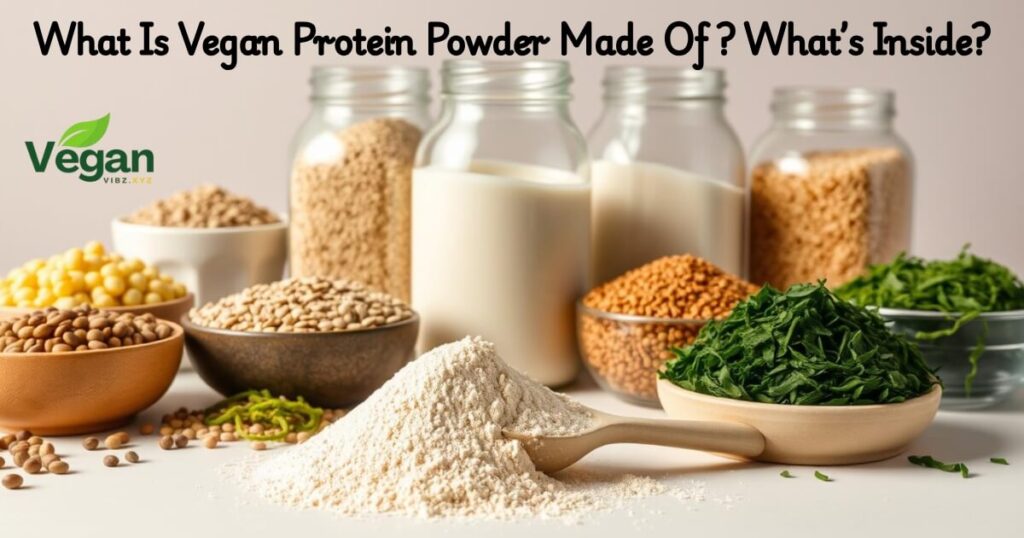
Are you searching the answer of what & How The Vegan Protein Powder Made Of? The demand for plant-based protein powder ingredients has grown a lot. The global market is expected to hit $13.8 billion by 2027. If you care about your health, you might already know the good things about vegan protein powder. But have you ever wondered what’s really in these supplements?
Exploring vegan protein powder ingredients is exciting. I’m here to tell you about the different parts that make up these supplements. You’ll find pea, rice, hemp, and brown rice protein among others. Knowing what’s in them and their benefits helps you make better choices for your health. Discover the Best Vegan Protein Powder for Weight Loss
Key Takeaways
- Understanding the ingredients in vegan protein powder is crucial for making informed decisions.
- Popular ingredients include pea, rice, and hemp protein.
- Vegan protein powder can support overall health and wellness.
- It’s essential to choose a product that aligns with your dietary needs.
- Always check the label for certifications and transparency.
Understanding Plant-Based Protein Supplements
In recent years, the demand for plant-based protein supplements has skyrocketed. This is due to people wanting healthier and more eco-friendly food choices. Knowing about these supplements is key to making smart decisions.
The Rise of Vegan Protein Products
The popularity of vegan protein products has soared. This is because more people see the benefits of plant-based diets. Vegan protein sources are viewed as better for the planet and our health compared to animal proteins. This change is driven by those who care about the environment, their health, and animal welfare.
A well-known nutrition expert says, “The demand for plant-based protein is no longer a niche market; it’s becoming mainstream.” This shows how widely accepted vegan protein products have become.
How Plant Proteins Differ from Animal Proteins
Plant and animal proteins differ mainly in their amino acid makeup. Animal proteins are complete because they have all nine essential amino acids. But, many plant proteins lack some of these amino acids. Still, by eating a variety of plant-based protein sources, you can get all the amino acids you need.
For example, pea and rice proteins are often mixed because they together make a complete protein. This shows how versatile and nutritious plant proteins can be. They also often have extra nutrients like fiber and antioxidants, which animal proteins usually don’t.
When picking a protein powder for vegetarians, look at more than just the protein content. Consider the vitamins, minerals, and how it’s made. These factors greatly affect the quality of the protein supplement.
What Is Vegan Protein Powder Made Of?

Vegan protein powders come from natural protein powder ingredients chosen for their health benefits. Each product has its own mix, but they share key traits.
Looking at the ingredients list, you’ll see a mix of main ingredients and extras. These extras boost the product’s health benefits and how well it works.
Common Base Ingredients
The core of vegan protein powders is their base ingredients. These come from plants like peas, rice, hemp, and soy. They’re picked for their protein and amino acids.
| Base Ingredient | Protein Content | Amino Acid Profile |
|---|---|---|
| Pea Protein | High | Rich in BCAA |
| Rice Protein | Moderate | Hypoallergenic |
| Hemp Protein | Moderate | Complete Amino Acid Profile |
| Soy Protein | High | Complete Amino Acid Profile |
Additional Ingredients and Additives
Many vegan protein powders also have extra ingredients. These can be natural sweeteners, flavorings, vitamins, and minerals. They help with taste, texture, and nutrition.
Some may have thickeners or emulsifiers to make mixing easier. Knowing these ingredients is key, if you have certain dietary needs.
When picking a vegan protein powder, think about what you need. Choose one that fits your diet and values. If you have questions, contact the maker.
Primary Plant Protein Sources
Primary plant protein sources are key in vegan protein powders. They offer different nutritional profiles. These sources help decide the quality and effectiveness of the product.
Pea Protein
Pea protein is a top choice among plant-based proteins. It’s packed with essential amino acids, like branched-chain amino acids (BCAAs). These are important for muscle recovery and growth.
A study in the Journal of the International Society of Sports Nutrition found pea protein as good as whey protein. It helps increase muscle thickness and strength.
“Pea protein is great for those who need a protein that’s easy to digest and doesn’t cause allergies,” says a nutrition expert.
Rice Protein
Rice protein is also a common choice. It has less protein than pea protein but is still valuable, often mixed with other proteins. It’s easy to digest and good for those with allergies.
Hemp Protein
Hemp protein is known for its complete amino acid profile and omega-3 fatty acids. It may have less protein than others, but its unique nutritional profile is appealing to many.
Soy Protein
Soy protein has been around for decades. It’s a complete protein with all nine essential amino acids. It also has health benefits, like supporting heart health.
In summary, these plant protein sources are essential for making quality vegan protein powders. Knowing their benefits helps consumers choose the right supplements.
Secondary Plant Protein Sources

Exploring vegan protein powder means looking at secondary plant protein sources. These options add nutrients to these supplements. They are valuable for vegans looking to boost their protein intake.
Pumpkin Seed Protein
Pumpkin seed protein is a nutrient-rich option. It’s packed with essential minerals like zinc and magnesium. Its amino acid profile is impressive, making it a great vegan protein powder addition. Benefits include:
- High in protein and fiber
- Rich in essential minerals
- Supports heart health
Sunflower Seed Protein
Sunflower seed protein is gaining popularity. It’s high in protein and hypoallergenic, perfect for sensitive stomachs. It’s also rich in vitamins and minerals like vitamin E and selenium.
Chia and Flaxseed Proteins
Chia and flaxseed proteins are worth mentioning. They’re rich in omega-3 fatty acids and fiber. Chia seed protein is known for its ability to absorb water, making you feel full.
Emerging Plant Protein Sources
New plant protein sources are being discovered. Examples include protein from potato, sweet potato, and algae. These sources offer better nutrition and are sustainable.
As vegan protein powder demand grows, we’ll see more innovative sources. These additions make vegan protein powders effective, sustainable, and good for the environment.
Nutritional Profile of Vegan Protein Powders
Vegan protein powders have both benefits and limitations. They can support your health and wellness. Let’s look at what they offer.
Protein Content and Amino Acid Profiles
Vegan protein powders are packed with protein. This is good for muscles and body functions. The amount of protein varies, from 15g to 30g per serving.
It’s also important to look at the amino acid profile. Amino acids are the building blocks of protein. A good vegan protein powder should have all nine essential amino acids (EAAs).
Amino Acid Profiles: Some vegan proteins lack certain amino acids. For example, pea protein is low in methionine. Rice protein is low in lysine. But mixing different proteins can fix this.
“A well-balanced vegan protein powder should contain all nine essential amino acids.”
Vitamins, Minerals, and Additional Nutrients
Many vegan protein powders also have vitamins and minerals. They add nutrients like vitamin D, calcium, and iron. These are good for bones, immune function, and overall health.
- Vitamin B12: Essential for nerve function and the production of red blood cells.
- Iron: Vital for oxygen transport and preventing anemia.
- Calcium: Crucial for bone health and muscle function.
Caloric Content and Macronutrient Breakdown
The calories in vegan protein powders vary. A serving can have 100 to 200 calories. It’s also important to look at the macronutrient breakdown. This includes carbs and fats, which affect energy and diet goals.
When picking a vegan protein powder, think about your needs and goals. Whether it’s for muscle growth, weight management, or diet supplement, knowing the nutritional profile helps you choose wisely.
How to Use Vegan Protein Powder Effectively
To get the most out of vegan protein powder, you need a smart plan. Whether you’re trying to boost your fitness or just want more protein in your diet, knowing how to use it right is key.
Optimal Timing and Dosage
When and how much you take vegan protein powder matters a lot. Studies show that taking it within an hour after working out helps with muscle repair and growth. This is super helpful for vegetarians and vegans using top-notch plant-based protein powder.
It’s good to aim for 1-2 scoops (about 20-40 grams of protein) after your workout. But, how much you need can change based on your weight, how active you are, and your fitness goals.
“The key to effective protein supplementation is not just the amount of protein, but also the timing and consistency of intake,” says a leading nutrition expert.
Mixing Techniques for Best Texture
The feel of your protein shake is important. To get the best texture, you need the right mixing tricks. Start by adding a bit of liquid to your vegan protein powder and mix until it’s smooth. Then, add more liquid slowly while mixing.
- Use a shaker bottle for convenience and to prevent lumps.
- Try different liquids like almond milk or coconut water to find your favorite taste and texture.
- Adding ice can make your shake thicker and more refreshing.
Creating Balanced Protein Shakes
Making a balanced protein shake is more than just mixing your protein powder for vegetarians with water. Add other nutrient-rich ingredients to boost your shake’s nutrition.
| Ingredient | Nutritional Benefit |
|---|---|
| Frozen Berries | Antioxidants, Fiber, and Natural Sweetness |
| Spinach | Iron, Vitamins, and Antioxidants |
| Almond Milk | Low-Calorie, Rich in Vitamins |
By following these tips, you can get the most out of your plant-based protein powder ingredients. This will help you reach your health and fitness goals.
Creating Your Own Vegan Protein Blends
Making your own vegan protein blends lets you match your supplement to your diet. You can mix different plant protein sources to get all amino acids. This way, you can also pick a flavor you like.
One big plus of making your own protein powder is picking proteins that go well together. This means picking proteins that together have all the amino acids you need.
Combining Complementary Protein Sources
To make a balanced protein blend, mix different plant proteins. For example, pea and rice proteins are a great pair. They fill in each other’s amino acid gaps.
- Pea protein is rich in lysine but lacks methionine.
- Rice protein has less lysine but more methionine.
- Hemp protein adds omega-3s and fiber.
By blending these proteins, you get a mix that’s complete in amino acids. You also get extra nutrients.
Adding Natural Flavors and Sweeteners
To make your protein blend taste better, add natural ingredients. Try:
- Vanilla or chocolate extracts for a tasty flavor.
- Stevia or monk fruit sweeteners for fewer calories.
- Fruits like berries or bananas for flavor and extra nutrients.
Try different mixes to find the flavor you love. This way, you avoid artificial additives.
Storage and Shelf Life Tips
Storing your homemade vegan protein powder right is key. Here’s how:
| Storage Method | Shelf Life |
|---|---|
| Air-tight container in a cool, dry place | 6-9 months |
| Refrigeration | 9-12 months |
| Freezer | 1-2 years |
Follow these tips to keep your protein blends fresh and tasty. This way, you can enjoy them for a long time.
Potential Drawbacks and How to Address Them
Vegan protein powder has many benefits, but it also has challenges. Knowing these can help you enjoy its advantages more.
Solving Digestibility Issues
Some people find vegan protein powder hard to digest. This can cause bloating, gas, or stomach pain. To fix this, pick a protein powder made from easy-to-digest sources like pea or rice.
Look for products with digestive enzymes too. These enzymes can make digestion smoother. Also, mixing your protein powder with non-dairy milk or yogurt can help your stomach.
Managing Allergen Concerns
Vegan protein powders might have allergens like soy, nuts, or gluten. If you’re allergic, choose a product without these. Always read labels carefully to avoid allergens.
Choosing products with “Certified Organic” or “Non-GMO” labels can also help. For example, an organic protein powder might have fewer allergens because it’s made without pesticides.
Balancing Cost with Quality
The price of vegan protein powder varies a lot. It’s important to find a balance between cost and quality. Cheap products might not be as good or could have extra additives.
Look for products with clear labels that show their plant-based protein powder ingredients. This shows they’re made well. Also, products with third-party certifications are usually of higher quality.
Conclusion
Exploring vegan protein powder shows us how important it is to know what’s in it. Understanding the ingredients helps us pick the right one for our diet. This ensures we get what we need and want.
Pea, rice, hemp, and soy are top choices for their health benefits. Mixing these can give you all the amino acids your body needs. This mix supports your health and fitness.
When picking a vegan protein powder, think about how easy it is to digest and if it might cause allergies. Also, consider the cost. This helps you find a good quality supplement that fits your budget and fitness goals.
In short, vegan protein powder is great for a plant-based diet if chosen wisely. Knowing what’s in it and its benefits helps you use it well. This supports your health and fitness journey.
FAQ
What is vegan protein powder made of?
Vegan protein powder comes from plants. It’s made from pea, rice, hemp, and soy protein. It also includes fruits, vegetables, and herbs.
What are the primary plant protein sources used in vegan protein powder?
The main sources are pea, rice, hemp, and soy protein. Each has its own nutritional benefits.
Are there any secondary plant protein sources used in vegan protein powder?
Yes, there are. Pumpkin seed, sunflower seed, chia, and flaxseed protein are used too. They add more nutrition and variety.
How do I choose the best vegan protein powder for my needs?
Think about your diet, fitness goals, and what you like. Look for high-quality, natural ingredients without allergens or additives.
Can I mix different types of protein powder together?
Yes, you can mix them. This way, you can get a blend that fits your needs. For example, pea and rice protein together offer a full amino acid profile.
How do I store vegan protein powder to maintain its quality?
Keep it in a cool, dry place. Avoid sunlight and moisture. Follow the maker’s advice on shelf life and use.
Are there any potential allergens or sensitivities I should be aware of when using vegan protein powder?
Yes, some might be allergic to pea or soy protein. Always read labels and talk to a doctor if you’re unsure.
Can I use vegan protein powder if I’m not vegan or vegetarian?
Yes, you can. Vegan protein powder is a great way to add plant-based protein to your diet, whether you’re vegan or not.