Are you curious about the secret to achieving radiant, healthy looking skin without compromising your values? I’ve found that plant-derived ingredients are key. But what makes them so effective? I share my experience of having plant based ingredients for vegan skin care that nourish our skin a lot without any damage.
Switching to vegan skincare has changed my life. Using natural ingredients daily has made my skin healthier. It also matches my values.
Exploring vegan skincare has taught me a lot. It’s shown me how plant-based ingredients are good for our skin and the planet.
Key Takeaways
- Discover the benefits of using natural ingredients in vegan skincare.
- Learn how plant-derived ingredients can improve skin health.
- Explore the importance of embracing a natural and ethical skincare routine.
- Understand the role of plant-based ingredients in achieving healthy, radiant skin.
- Find out how to make informed choices when selecting vegan skincare products.
Why I Switched to Plant-Based Skincare
Exploring plant-based ingredients changed my skincare routine for the better. I found natural ingredients that are kind to my skin and the planet.
My Skin Transformation Journey
My skin has never looked better. Switching to plant-based skincare cut down on irritation and made my skin more elastic. Ingredients like aloe vera and hyaluronic acid were key to this change.
Best Plant-based Ingredients for Vegan Skincare
In my quest for better skin, I’ve discovered some top plant-based ingredients. They’re not just good for your skin but also fit the vegan values of kindness and care for the planet. Let’s explore the best plant-based ingredients to boost your skincare routine.
Hydrating Heroes: Aloe Vera, Hyaluronic Acid, and Glycerin
Keeping your skin hydrated is essential for a healthy glow. Aloe vera is famous for its moisturizing and soothing effects, making it a key part of vegan skincare. Hyaluronic acid, a plant-based ingredient, holds moisture, making your skin look smooth and soft. Glycerin also keeps moisture in, keeping your skin hydrated all day.
Antioxidant Powerhouses: Green Tea, Vitamin C, and Rosehip
Antioxidants are vital for protecting your skin from harm and keeping it looking young. Green tea is full of antioxidants that fight inflammation and free radicals. Vitamin C, found in plants, brightens your skin and boosts collagen, making it more elastic. Rosehip oil is rich in vitamins and fatty acids, helping to heal and smooth out your skin.
Soothing Solutions: Chamomile, Calendula, and Oat
If you have sensitive skin, you need ingredients that calm it down. Chamomile is known for its soothing effects, reducing redness and irritation. Calendula helps your skin heal and is gentle. Oat has anti-inflammatory properties, easing itching and irritation, making it great for soothing masks and creams.
For more updates must visit my website Veganvibz.xyz
My Favorite DIY Vegan Skincare Recipes
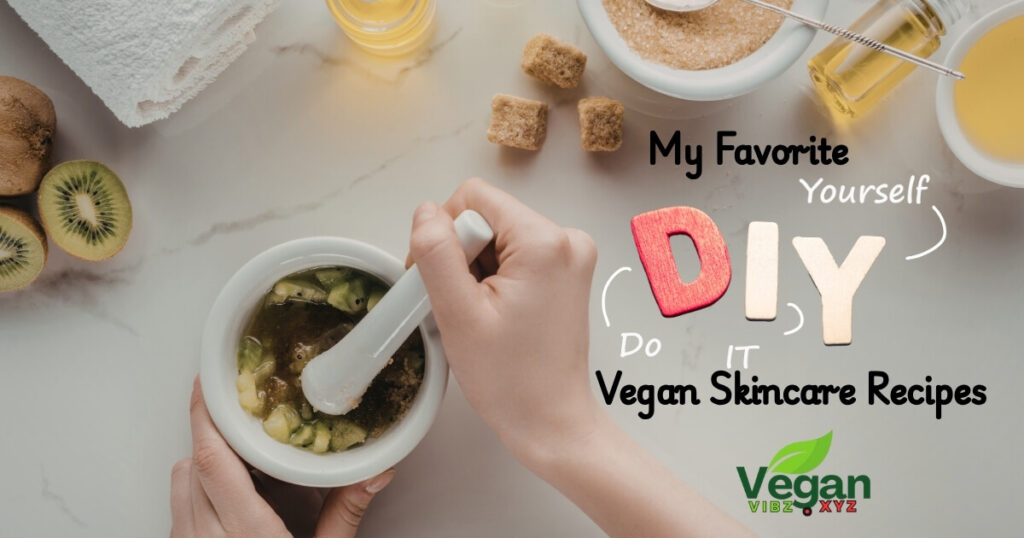
Creating my own vegan skincare products has changed my skin for the better. I’m excited to share my top recipes with you. Using herbal remedies for vegan skincare, I can make products that fit my skin perfectly.
Brightening Face Mask with Turmeric and Coconut Oil
This face mask is a musthave for me. I mix 1 teaspoon of turmeric powder with 2 tablespoons of coconut oil. It makes a paste that brightens and soothes my skin.
The anti inflammatory properties of turmeric reduce redness. Coconut oil moisturizes and nourishes my skin.
Exfoliating Scrub with Coffee Grounds and Shea Butter
Coffee grounds are great for exfoliating. I mix 1 tablespoon of coffee grounds with 2 tablespoons of shea butter. It’s a scrub that gently removes dead skin cells and leaves my skin smooth.
The antioxidants in coffee help reduce the appearance of cellulite.
Moisturizing Serum with Jojoba and Essential Oils
Jojoba oil is a fantastic moisturizer that absorbs quickly. I mix it with a few drops of my favorite essential oils. It creates a serum that hydrates and balances my skin.
The lightweight texture makes it perfect for daily use.
| Recipe | Key Ingredients | Benefits |
| Brightening Face Mask | Turmeric, Coconut Oil | Brightens, Soothes |
| Exfoliating Scrub | Coffee Grounds, Shea Butter | Exfoliates, Moisturizes |
| Moisturizing Serum | Jojoba Oil, Essential Oils | Hydrates, Balances |
Conclusion
Adding the best plant based ingredients to my skincare routine has changed everything.
My skin looks and feels better, and I’m helping the planet. This is because I’m choosing cruelty-free and sustainable beauty.
Using natural ingredients like aloe vera and green tea is amazing. They come from nature and are good for our skin. We can find these in stores or make our own skincare at home.
I want you to try plant-based skincare and see the difference.
It’s not just about looking good. It’s about standing up for what we believe in and caring for our planet.
FAQ
What are the best plant-based ingredients for vegan skincare?
The top plant-based ingredients for vegan skincare include aloe vera and green tea. Chamomile and hyaluronic acid are also great. Vitamin C, rosehip, and calendula offer many benefits. Oat, turmeric, coconut oil, jojoba oil, and shea butter are also excellent choices.
How do I choose the right plant-based ingredients for my skin type?
To pick the right ingredients, think about your skin concerns. For dry skin, try hyaluronic acid and glycerin. They provide deep hydration. If your skin is sensitive, chamomile and calendula are good choices.
Are DIY vegan skincare recipes effective?
Yes, DIY vegan skincare recipes can work well. For example, a turmeric and coconut oil face mask can brighten and moisturize. A coffee grounds and shea butter scrub can exfoliate and nourish.
Can plant-based ingredients help with specific skin concerns like acne or aging?
Yes, some plant-based ingredients target specific skin issues.Green tea and vitamin C fight aging signs. Tea tree oil and aloe vera soothe acne-prone skin.
How can I incorporate herbal remedies into my vegan skincare routine?
Use herbs like chamomile, calendula, and rosehip in your skincare. You can add them to face masks, serums, and creams. Making herbal infusions or extracts can also meet your skin’s needs.