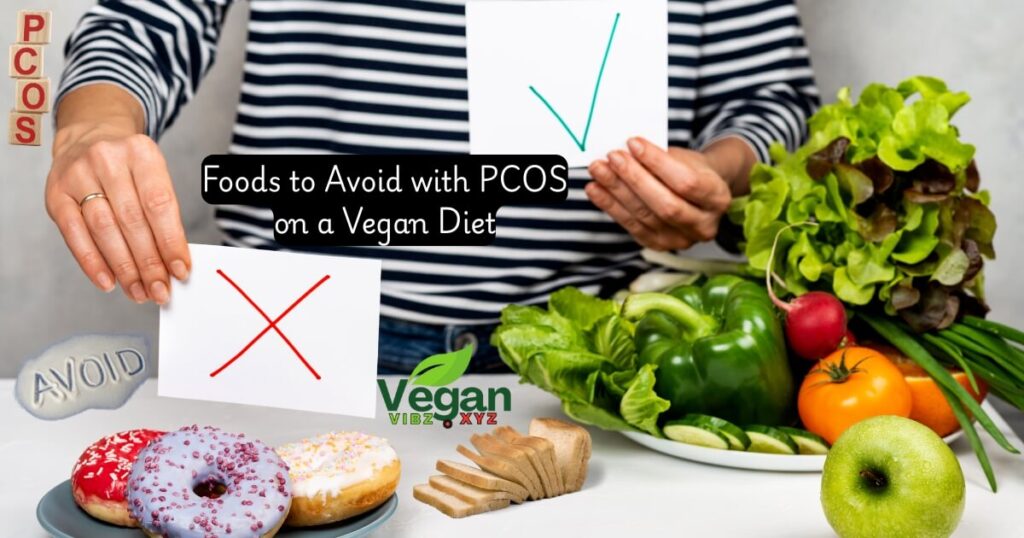
First question arises in our mind ” which foods to avoid with PCOS on a Vegan Diet? Specially when you’re following a vegan lifestyle and managing PCOS (Polycystic Ovary Syndrome), you’re already making mindful choices about what goes on your plate. But here’s the thing what you don’t eat matters just as much as what you do eat. Certain foods can trigger hormonal imbalances, spike blood sugar, and worsen symptoms like irregular periods, weight gain, acne, and fatigue.
In our PCOS Vegan Diet pillar post, we explored the complete guide to building a PCOS-friendly vegan lifestyle. We also shared Best Vegan Foods for PCOS Symptom Relief yesterday, highlighting nutrient-rich, hormone-friendly options. Today, let’s focus on the other side of the story the foods you should avoid for better PCOS management on a vegan diet.
Why Avoiding Certain Foods Matters in PCOS Management
PCOS is closely linked to insulin resistance, inflammation, and hormonal imbalance. Some vegan-friendly foods, even though plant-based, can still:
Cause blood sugar spikes
Increase inflammation
Disrupt hormonal balance
By identifying and avoiding these foods, you give your body a chance to restore balance naturally, improve energy levels, and support long-term hormonal health. So’ let’s discuss in detail which foods to avoid with PCOS on a vegan diet on a priority basis.
Foods to Avoid with PCOS on a Vegan Diet
1. Refined Carbs and Processed Grains
Think white bread, pasta, pastries, and white rice these are vegan but high in refined carbs. They break down quickly into sugar, leading to insulin spikes, which can worsen PCOS symptoms.
Better choice: Swap refined carbs for whole grains like quinoa, brown rice, and oats, as we discussed in Best Vegan Foods for PCOS Symptom Relief.
2. Sugary Snacks and Desserts
Many vegan desserts cookies, brownies, candy are loaded with added sugars and syrups. While they may be dairy-free, sugar promotes inflammation and weight gain, two big triggers for PCOS symptoms.
Tip: If you have a sweet tooth, go for natural sweeteners like dates or fruit-based treats, which we’ve covered in the PCOS Vegan Diet guide.
3. Highly Processed Vegan Meats
Yes, those plant-based burgers and sausages can be convenient, but many are ultra-processed, high in sodium, unhealthy fats, and additives. These can contribute to inflammation and hormonal imbalance.
Better choice: Focus on whole-food protein sources such as lentils, chickpeas, and tofu, which are rich in fiber and won’t cause drastic insulin spikes.
4. Sweetened Plant-Based Milks
Almond, oat, and soy milk are great but not if they’re loaded with sugar. Sweetened plant milks can have as much sugar as soda, making them a hidden source of blood sugar spikes.
Tip: Always go for unsweetened versions and flavor them naturally with cinnamon or vanilla.
5. Fried and Oily Foods
Fried snacks like chips, pakoras, or deep-fried vegan fast food can be high in trans fats, which promote inflammation a key factor in PCOS symptom flare-ups.
Better choice: Air-fry, bake, or steam your snacks for a healthier twist.
6. Vegan Junk Food
Just because it’s vegan doesn’t mean it’s healthy. Vegan pizzas, donuts, and ice creams often contain refined flour, sugar, and unhealthy oils that disrupt hormonal balance.
Remember: PCOS management is about choosing nutrient-rich, whole foods, as we explained in Best Vegan Foods for PCOS Symptom Relief.
7. Artificial Sweeteners
While they may seem like a better alternative to sugar, some artificial sweeteners can still affect insulin sensitivity and gut health both of which are linked to PCOS symptoms.
Tip: Stick to natural sweeteners like stevia, monk fruit, or raw honey (if you consume it as part of a plant-forward diet).
8. Caffeinated Energy Drinks
Energy drinks may be vegan, but their high caffeine and sugar content can increase cortisol (stress hormone), which interferes with ovulation and hormonal balance.
Better choice: Switch to herbal teas, matcha, or infused water for a steady energy boost without the crash.
Practical Tips to Stay on Track
Plan your meals to avoid last-minute cravings for processed foods.
Read labels carefully even vegan products can have hidden sugars and unhealthy fats.
Balance every meal with fiber, healthy fats, and plant-based proteins to stabilize blood sugar.
Link your learning re-read our PCOS Vegan Diet pillar post for the full strategy and check Best Vegan Foods for PCOS Symptom Relief for your go-to food list.
Final Thoughts
Avoiding these foods doesn’t mean you have to give up flavor or enjoyment it’s about making smarter swaps that support your hormonal health and energy.
When you combine eliminating trigger foods with eating nutrient-rich options (like we covered in Best Vegan Foods for PCOS Symptom Relief), you create a balanced vegan lifestyle that not only aligns with your ethics but also works with your body’s needs.
For the complete PCOS-friendly vegan roadmap, visit our PCOS Vegan Diet guide your starting point for healthier, more energized living.