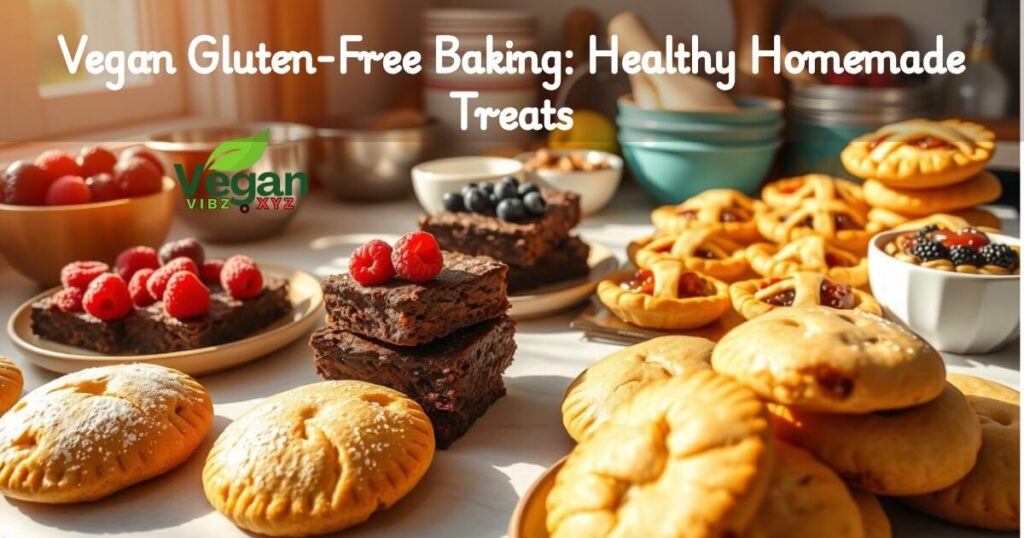
Did you know that a plant-based diet can lower your risk of heart disease and diabetes? More people are choosing healthier lives, and vegan gluten-free baking is getting more popular.
Making tasty treats at home is simpler than you might think. Just a few swaps and some new recipe ideas can make your favorite baked goods healthier without losing flavor.
Exploring vegan gluten-free baking is not just about yummy food. It’s also about living more sustainably.
Key Takeaways
- Discover simple substitutions for traditional baking ingredients
- Explore creative recipe ideas for vegan gluten-free treats
- Learn how to maintain flavor and nutrition in your baked goods
- Understand the benefits of a plant-based diet
- Find inspiration for healthy homemade treats
The Fundamentals of Vegan Gluten-Free Baking
Vegan gluten-free baking is about making treats that are both tasty and good for you. It’s not just about swapping out ingredients. It’s about knowing how each part of a recipe works and choosing wisely.
Why Choose Vegan Gluten-Free Baking?
Vegan gluten-free baking is great for those with dietary needs or preferences. It lets people enjoy yummy treats without animal products or gluten. This way, they can also help their health and the planet. Plus, it’s a fun way to get creative in the kitchen.
Health Benefits of Plant-Based, Allergen-Free Treats
Plant-based, allergen-free treats are full of health perks. They often have less saturated fat and more fiber because of plant-based ingredients. Also, skipping gluten and dairy lowers the chance of allergic reactions. This makes treats more safe and enjoyable for more people.
| Benefit | Description |
|---|---|
| Lower Saturated Fats | Plant-based ingredients cut down on saturated fats. |
| Higher Fiber Content | Plant-based diets are full of fiber, which is good for your gut. |
| Reduced Allergy Risk | Steering clear of common allergens like gluten and dairy lowers allergy risks. |
Setting Up Your Kitchen for Success
To do well in vegan gluten-free baking, you need the right stuff. Start by getting gluten-free flours and plant-based milks. Also, a good mixer and measuring cups are key for better baking.
Learning about vegan gluten-free baking lets you make tasty treats for everyone. Whether it’s for yourself or others, this way ensures healthy, homemade goodies for all.
Essential Ingredients for Vegan Gluten-Free Baking
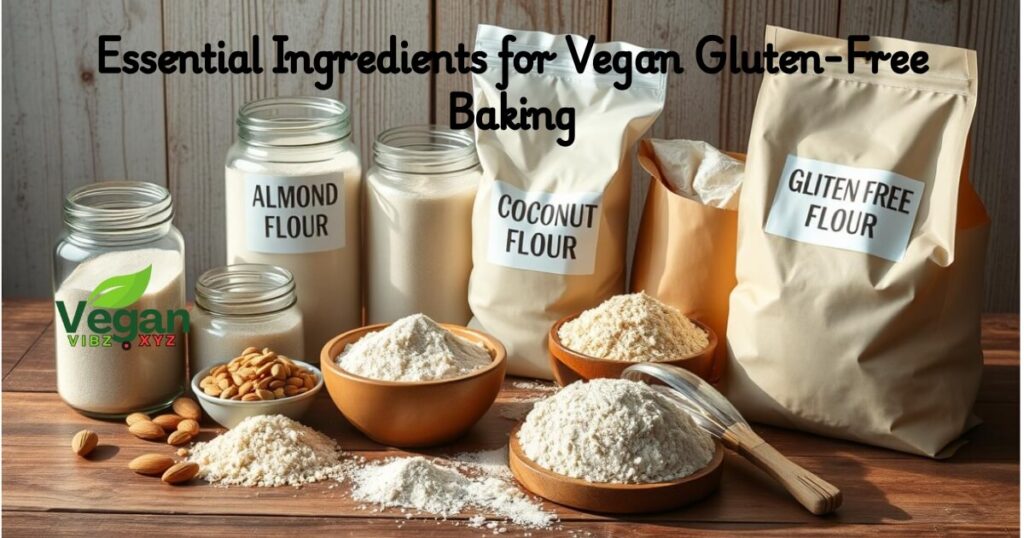
Understanding the key ingredients is crucial for vegan gluten-free baking. You need to know about gluten-free flours, plant-based sweeteners, and dairy alternatives. These ingredients help make delicious and healthy treats.
Gluten-Free Flour Options and Their Properties
Gluten-free flours are the base of vegan gluten-free baking. Each flour has its own texture and flavor. This makes some flours better for certain recipes than others.
Almond and Coconut Flours
Almond flour is made from ground almonds. It’s rich in protein and healthy fats, perfect for dense treats like cakes and cookies. Coconut flour, on the other hand, is very absorbent. It works well in recipes with lots of eggs or liquid.
Chickpea, Buckwheat, and Quinoa Flours
Chickpea flour is high in protein and great for savory baked goods. Buckwheat flour, despite its name, is gluten-free and has a nutty taste. Quinoa flour is packed with protein and minerals, making it a healthy choice for baked goods.
| Flour Type | Protein Content | Best Used For |
|---|---|---|
| Almond Flour | High | Cakes, Cookies |
| Coconut Flour | Low | Recipes with multiple eggs or liquid |
| Chickpea Flour | High | Savory baked goods |
| Buckwheat Flour | Medium | Pancakes, Waffles |
| Quinoa Flour | High | Nutritious baked goods |
Plant-Based Sweeteners
Vegan bakers have many plant-based sweeteners to choose from. Options include maple syrup, coconut sugar, and date sugar. Each sweetener has its own flavor and properties, allowing for a variety of tastes in baked goods.
Dairy Alternatives for Baking
Dairy alternatives like almond milk, soy milk, and coconut milk are key in vegan gluten-free baking. They can replace traditional milk in most recipes, offering different flavors and textures.
Understanding Egg Replacers in Vegan Baking
Vegan baking uses many egg replacers, each with special properties. Eggs do many things in regular baking, like making things rise, adding moisture, and sticking together. So, finding the right egg replacers is important to get the best results in vegan baking.
Flax and Chia Eggs
Flax and chia eggs are favorites for vegan baking. To make a flax egg, mix 1 tablespoon of ground flaxseed with 3 tablespoons of water. Let it sit for a few minutes to thicken. A chia egg is made the same way, using 1 tablespoon of chia seeds with 3 tablespoons of water. Both create a gel-like texture that helps ingredients stick together, perfect for muffins and cakes.
Aquafaba: The Magic of Chickpea Water
Aquafaba, the liquid from canned chickpeas, is a great egg replacer. It can be whipped to make meringues or used as a binder. Its ability to act like eggs makes it very useful in vegan baking. Just whip the liquid with a fork or blend it until frothy, then add it to your recipe.
Commercial Egg Replacers and When to Use Them
Commercial egg replacers are easy to use for those who want a simple solution. They are made from starches, leavening agents, and other ingredients to mimic eggs. They’re great for recipes where eggs are key, like cakes and cookies. Always use the right amount as directed on the package.
In conclusion, knowing how to use egg replacers can really improve your vegan baking. Whether you choose natural options like flax and chia eggs or commercial products, the most important thing is to experiment. Find what works best for your recipes.
Mastering Gluten-Free Flour Blends
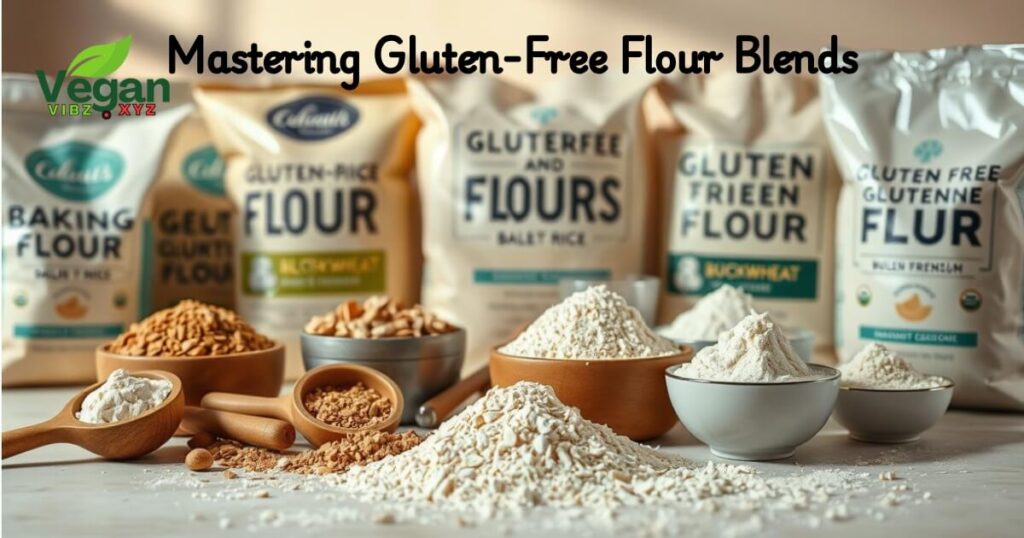
To get the best results in gluten-free vegan baking, it’s key to know how to mix flour blends. Gluten-free baking is tricky because gluten is missing. It gives structure and elasticity to regular baked goods. But, with the right mix of gluten-free flours, you can make tasty treats.
Creating Your Own Flour Blends
Making your own gluten-free flour blends lets you tailor the taste and texture of your baked goods. A good mix usually has rice flour, almond flour, coconut flour, and tapioca flour. Try different ratios of these flours to find the best mix for your recipes.
Rice flour makes things light, while coconut flour soaks up moisture. Knowing what each flour does is important for a balanced mix.
Understanding Binders: Xanthan Gum and Psyllium Husk
Binders like xanthan gum and psyllium husk are vital in gluten-free baking. They help replace gluten’s binding properties, making your baked goods better in texture and structure. Xanthan gum is used in small amounts to improve texture. Psyllium husk adds fiber and helps keep things moist.
Using these binders right can greatly improve your gluten-free baked goods.
Store-Bought Blends Worth Trying
If making your own flour blends seems hard, there are many good store-bought options. Brands like Bob’s Red Mill and King Arthur have reliable gluten-free flour blends for many recipes.
| Flour Blend | Main Ingredients | Best Used For |
|---|---|---|
| Bob’s Red Mill Gluten-Free 1:1 Baking Flour | Rice flour, potato starch, tapioca flour | Cakes, cookies, and muffins |
| King Arthur Gluten-Free Multi-Purpose Flour | Rice flour, whole grain brown rice flour, tapioca flour | Bread, pizza dough, and pastries |
Essential Tools and Techniques for Vegan Gluten-Free Baking
To be great at vegan gluten-free baking, you need the right tools and techniques. With the right equipment and methods, you can make tasty, healthy treats. Check: Vegan Baking
Must-Have Kitchen Equipment
Having the right kitchen tools is key. You’ll need a high-speed blender or food processor for mixing wet ingredients. A stand mixer or hand mixer is great for creaming together butter and sugar substitutes.
A digital scale is important for measuring ingredients accurately. A silicone baking mat or parchment paper helps prevent baked goods from sticking to pans.
Mixing Methods That Matter
The way you mix ingredients affects the texture and consistency of your baked goods. For example, when using aquafaba or other egg replacers, whip them until they’re light and fluffy. When combining dry ingredients, use a gentle folding motion to avoid clumps.
By using the right tools and techniques, you’ll make delicious vegan gluten-free treats. Whether you’re baking low sugar vegan gluten-free goods or trying new vegan baking substitutes, knowing the basics is key.
Delicious Vegan Gluten-Free Bread Recipes
Creating delicious vegan gluten-free bread is a journey worth taking. With the right ingredients and techniques, you can produce bread that is not only healthy but also incredibly tasty.
Everyday Sandwich Bread
Making vegan gluten-free sandwich bread is easier than you think. Start with a blend of gluten-free flours like rice flour, almond flour, and tapioca flour. Add a natural sweetener like maple syrup and a pinch of salt. Use a flax egg or aquafaba as a binder to hold the ingredients together.
Mix well and let the dough rise before baking it to perfection.
Banana Bread Without Eggs or Gluten
Banana bread is a classic treat that can easily be made vegan and gluten-free. Use ripe bananas as a natural sweetener and moisture source. Replace eggs with flax or chia eggs, and choose a gluten-free flour blend.
Add some vanilla extract for extra flavor. The result is a moist and delicious bread perfect for breakfast or a snack.
“The key to great vegan gluten-free bread is using the right combination of ingredients and not overmixing the dough.” – Expert Baker
Troubleshooting Common Bread Issues
Even with the best ingredients, issues can arise. If your bread is too dense, it might be due to overmixing or insufficient rising time. If it’s too crumbly, you might need to adjust your flour blend or add more binders like xanthan gum.
Troubleshooting these issues will help you perfect your vegan gluten-free bread recipes.
By following these tips and recipes, you’ll be well on your way to baking delicious vegan gluten-free bread that everyone can enjoy.
Perfect Vegan Gluten-Free Cookies and Brownies
Discover the joy of baking vegan gluten-free cookies and brownies. They are delicious, cruelty-free, and safe for those with allergies. With the right ingredients and techniques, you can make treats that everyone will love.
Chocolate Chip Cookies That Don’t Crumble
Making vegan gluten-free chocolate chip cookies is easy with the right ingredients. Use almond flour and tapioca flour for a chewy texture. Replace eggs with flax eggs or chia eggs for the best results. Here’s a simple recipe to get you started:
- 1 cup almond flour
- 1/2 cup tapioca flour
- 1/2 cup coconut sugar
- 1/4 cup vegan chocolate chips
- 1 flax egg
Mix all ingredients until a dough forms. Then, bake at 375°F (190°C) for 10-12 minutes.
Fudgy Brownies Without Eggs or Butter
Fudgy brownies are a staple in vegan gluten-free baking. Use gluten-free flours and dairy-free chocolate for that perfect fudginess. Here’s a simple recipe:
- 1 cup gluten-free flour blend
- 1/2 cup unsweetened cocoa powder
- 1/4 cup coconut oil
- 1/4 cup dairy-free chocolate chips
- 1/4 cup maple syrup
Mix all ingredients until smooth. Then, bake at 350°F (175°C) for 20-25 minutes.
Tips for Perfect Texture Every Time
Achieving the perfect texture in vegan gluten-free baked goods can be challenging. But here are some tips to help:
“The key to perfect texture is in the balance of ingredients and not overmixing the batter.”
- Use a combination of gluten-free flours to achieve the right texture.
- Don’t overmix the batter, as this can lead to dense or tough treats.
- Experiment with different egg replacers to find what works best for you.
By following these tips and recipes, you’ll be well on your way to creating delicious vegan gluten-free cookies and brownies. Everyone will enjoy them.
Mastering the Art of Vegan Gluten-Free Baking
Vegan gluten-free baking is my passion. I’m excited to share my insights on making amazing celebration cakes and tasty breakfast treats. With the right techniques and ingredients, you can make delicious and beautiful baked goods.
Celebration Cakes That Impress
Celebration cakes are a highlight of any special occasion. With vegan gluten-free baking, you can make stunning cakes that everyone can enjoy. Use almond flour and coconut flour for the perfect texture. Adding flavor with vanilla extract and lemon zest can take your cakes to the next level.
To make your cakes moist and delicious, use the right egg replacers and dairy alternatives. Flax eggs and aquafaba are great for replacing eggs. Coconut milk and almond milk add creaminess to your batter.
Breakfast Muffins and Quick Breads
Breakfast muffins and quick breads are perfect for a quick and healthy breakfast. I love experimenting with gluten-free flours and plant-based sweeteners. Using oat flour and maple syrup adds a lovely flavor and texture to your muffins.
To make your breakfast treats more exciting, try adding different nuts, seeds, or dried fruits to the batter. Chia seeds and walnuts are great additions that provide a boost of omega-3 fatty acids and fiber.
Frosting and Filling Options
No celebration cake is complete without frosting and filling. I prefer using vegan cream cheese frosting or coconut whipped cream for a rich and creamy texture. Coconut cream and cashew cream are also excellent options for delicious fillings.
When it comes to filling your cakes, the possibilities are endless. You can use fruit curds, nut butters, or even chocolate ganache for a decadent treat. Experimenting with different flavors and combinations will help you find the perfect filling for your celebration cakes.
Advanced Vegan Gluten-Free Baking Projects
Take your baking to the next level with advanced vegan gluten-free projects. You’ll learn to make delicate pastries and flaky pie crusts. These skills will impress your friends and family with delicious treats.
Pie Crusts and Tart Shells
Making vegan gluten-free pie crusts and tart shells is an art. You need the right ingredients and techniques. Use gluten-free flours like almond and coconut, and a cold vegan butter substitute for a flaky crust. Chilling your dough is key to avoid a crumbly crust.
For tart shells, press the dough evenly into the pan. This prevents thick edges that don’t bake well. Blind baking with vegan-friendly weights or beans keeps the shape.
Donuts and Pastries
Vegan gluten-free donuts and pastries are fun to make and eat. Use a non-stick donut pan and a good gluten-free flour blend for soft donuts. For pastries, the lamination process is crucial for flaky layers.
Try different flavors like maple or cinnamon to make your treats special. They’ll be a hit at any gathering.
Storage and Preservation Tips
Proper storage keeps your baked goods fresh. Cooling them completely before storing in airtight containers prevents moisture. For longer storage, freeze them wrapped in plastic wrap or foil, then in a freezer-safe bag.
To enjoy frozen treats, thaw them at room temperature or warm them in the oven. This way, you can enjoy your vegan gluten-free creations for weeks.
Troubleshooting Common Vegan Gluten-Free Baking Problems
Dealing with dry textures and flavor issues is key to making great vegan gluten-free baked goods. As a vegan gluten-free baker, you might face several common problems. But, with the right techniques and ingredients, you can solve them easily.
Dealing with Dry or Crumbly Textures
Dry or crumbly textures often come from overmixing or too much gluten-free flour. To fix this, try using less flour or adding more liquid. Also, adding xanthan gum or psyllium husk can help. They improve texture by adding structure and keeping moisture.
Fixing Gummy or Dense Results
Gummy or dense results usually happen when you don’t bake enough or have the wrong flour mix. Make sure you bake for the right time and check the internal temperature. To get a lighter texture, use more starches or light flours in your flour blend.
Addressing Flavor Issues
Flavor problems can come from using bland or too strong ingredients. To improve flavor, try different spices, extracts, or plant-based milks. Also, using fresh, high-quality ingredients will help your baked goods taste better.
| Issue | Cause | Solution |
|---|---|---|
| Dry or Crumbly Texture | Overmixing or too much gluten-free flour | Reduce flour, add more liquid, use xanthan gum or psyllium husk |
| Gummy or Dense Results | Underbaking or imbalance in flour ratio | Adjust baking time, balance flour blend with starches or light flours |
| Flavor Issues | Use of bland or overpowering ingredients | Experiment with spices, extracts, or plant-based milks |
Conclusion: Embracing Your Vegan Gluten-Free Baking Journey
Thinking about vegan gluten-free baking makes me happy. It’s a journey that fills my kitchen with joy and creativity. I’ve found a new love for making tasty, healthy treats that bring people together.
We’ve covered the basics of vegan gluten-free baking. We talked about the right ingredients and how to mix gluten-free flours. We also looked at making yummy bread, cookies, and pastries for any event.
Keep trying new things as you bake. Experiment with different flours and egg substitutes. Remember, making mistakes is part of learning. With time and effort, you’ll get better at baking healthy, tasty treats.
Choosing vegan gluten-free baking is good for you and the planet. I’m looking forward to seeing where your baking journey goes. Keep exploring and sharing your creations with others.
FAQ
What are some common gluten-free flours used in vegan baking?
Almond flour, coconut flour, and chickpea flour are popular in vegan baking. So are buckwheat flour and quinoa flour. Each flour has its own special qualities and uses.
How do I replace eggs in vegan gluten-free baking?
You can use flax eggs, chia eggs, or aquafaba to replace eggs. Commercial egg replacers are also an option. The right choice depends on the recipe and texture you want.
What are some tips for achieving the right texture in gluten-free baked goods?
For the right texture, mix the right gluten-free flours and use binders like xanthan gum. Don’t overmix the batter. Try different flour blends and ratios to find what works best.
Can I use regular sugar in vegan gluten-free baking?
Yes, regular sugar works in vegan gluten-free baking. But, you can also try maple syrup, coconut sugar, or date sugar for different tastes.
How do I store vegan gluten-free baked goods to keep them fresh?
Store them in airtight containers at room temperature or in the fridge. Freezing is also an option. Always cool the goods completely before storing.
Can I make vegan gluten-free donuts and pastries?
Yes, you can make vegan gluten-free donuts and pastries. Use the right flours, egg replacers, and dairy alternatives. Experimenting with recipes and techniques will help you get the right texture and taste.
What are some common issues faced in vegan gluten-free baking, and how can I troubleshoot them?
Issues like dry textures, gummy results, and flavor problems are common. To fix these, adjust the flour ratios, use the right binders, and try different egg replacers and sweeteners.
Are there any specific kitchen equipment or tools that I need for vegan gluten-free baking?
You can start with basic kitchen tools. But, a digital scale, a mixing bowl with a non-slip bottom, and a rubber spatula are helpful. A stand mixer can also be useful for mixing and kneading.